In discussions about sustainability and the circular economy, there's one term that is starting to pop up more and more: the Digital Product Passport, often shortened to DPP. But what does a Digital Product Passport actually include? And why is it such a current topic at companies everywhere? In this blog, we’ll lay out the basics and explain the broader context of the legislation, so you know what it's all about.
The origins of the Digital Product Passport
The Digital Product Passport isn’t a standalone initiative. It’s an essential part of the European Green Deal, an ambitious plan by the European Union. The overarching goal of this Green Deal is to reduce CO2 emissions by 2030 and make Europe the first climate-neutral continent by 2050.
An important component of this is a fully circular economy, for which the EU has established the Ecodesign for Sustainable Products Regulation (ESPR). This important piece of legislation outlines strict requirements for products to make them more durable, easier to repair, and better to recycle.
Within this ESPR legislation, the DPP plays a key role. The digital passports are designed to significantly improve the transparency, sustainability, and recyclability of all sorts of products and further reduce CO2 emissions.
What does Digital Product Passport (DPP) mean?
Simply put, a DPP is a Digital Product Passport: a standardised digital information sheet that is unique to each product. Think of it as a kind of digital CV or an extended label, but much more dynamic and informative.
The main aim of a DPP is to make all relevant data concerning a product's origin, ecological footprint, composition, repair instructions, and recycling possibilities available to all relevant parties in the supply chain. So, don’t just think of manufacturers and consumers, but also suppliers, importers, retailers, repairers, recycling companies, and so on.
A key part of the DPP is that this product information isn’t just hidden away somewhere. The legislation outlines that it must be easily accessible via a physical data carrier on the product itself or its packaging. The best-known example of this is a QR code, but an NFC chip that you can tap with your smartphone or an RFID tag are also possible.
What information is included in a DPP?
A key advantage of a DPP is its digital aspect: a lot more (and better structured) information can be shared than on, say, a physical label or form. The exact information will differ per product group, but you will generally be able to consult the following.
1. Basic product data
The name, brand, and model number of the product.
2.Where and how the product is manufactured
The materials used to make or build the product and the origin of the raw materials.
3. The impact on the environment
Concrete data on the ecological footprint: energy and water consumption during production, CO2 emissions throughout the lifecycle, and the presence of any potentially hazardous substances.
4. Repair and recycling
Clear instructions for repair, information on the availability of spare parts, and guidelines for disassembly and reuse.
5. Safety and legislation
Links to relevant conformity declarations, safety instructions, and other legally required documents.
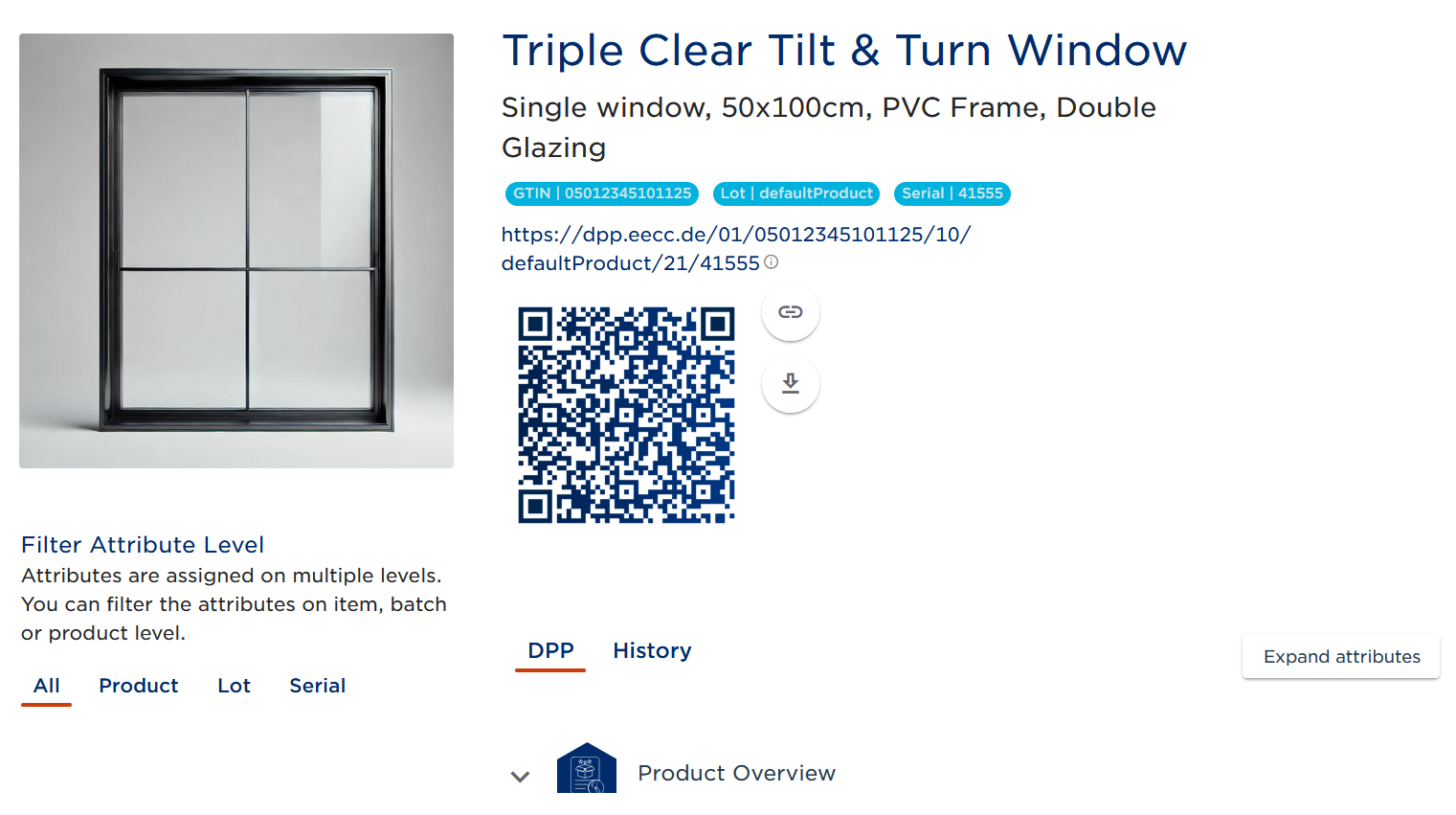
Want a concrete example to help visualise things? Via this link, you can find a (fictional) example of a DPP.
The Digital Product Passport: much more than a label
So, in short: a DPP gives you much more information than a traditional label. Thanks to this dynamic system, it becomes far easier to guarantee the digital traceability of products. Since the sustainability of a product is made tangible (and, more importantly, verifiable!), the circular economy receives a serious boost.
But why exactly is this profound change necessary? And what are the concrete drivers behind the Green Deal, the ESPR, and the DPP? You’ll discover that in our next blog!
We value your privacy! We use cookies to enhance your browsing experience and analyse our traffic. By clicking "Accept All", you consent to our use of cookies.